What to Do in the First Hour After a Burst Pipe in Your Boise Home
Short answer
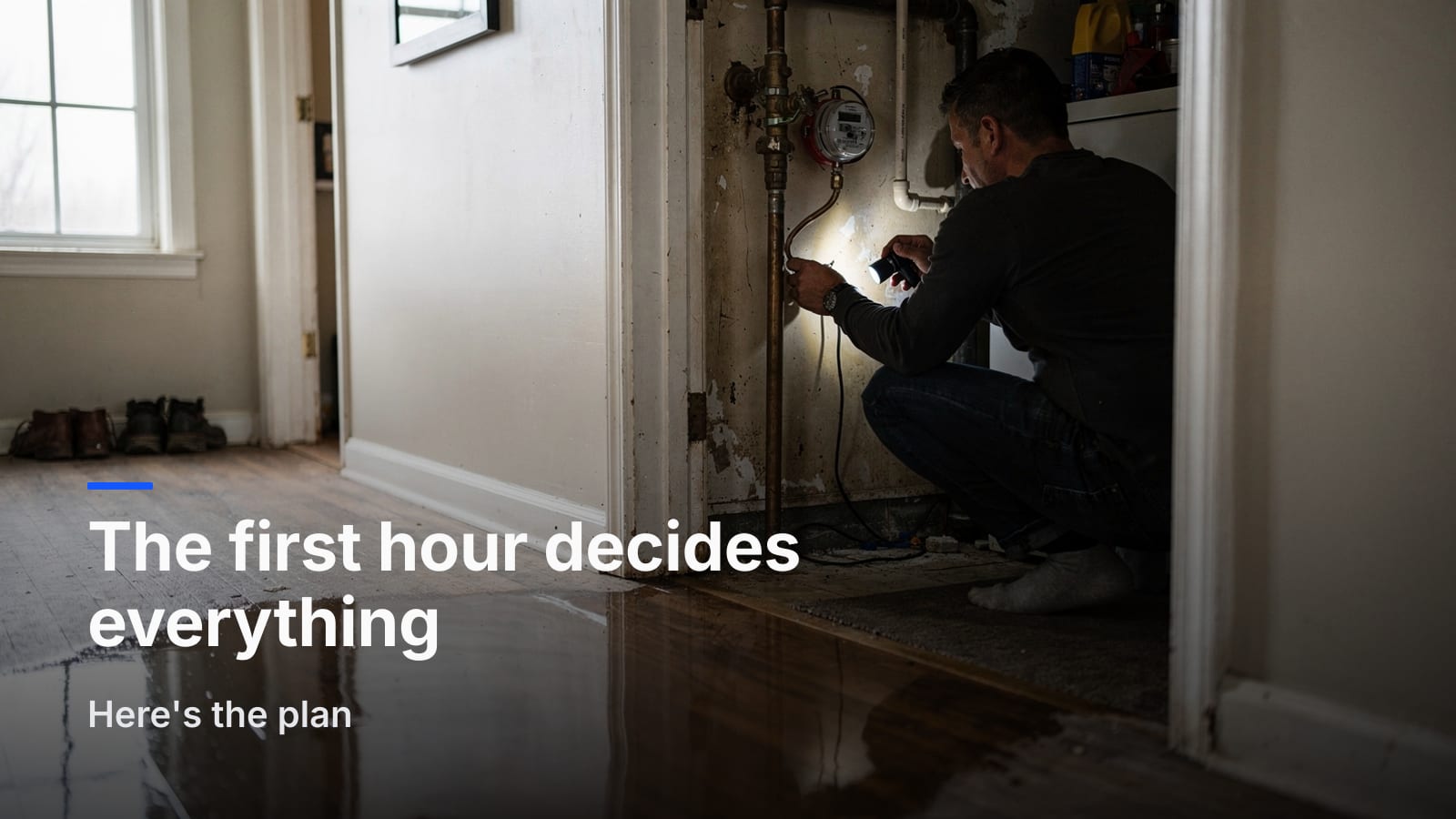
**What is the very first thing I should do?** Shut off the main water valve to stop the flow before you do anything else. **Should I turn off the electricity?** If water is anywhere near outlets, switches, or a breaker panel, do not touch the panel yourself — call an electrician or your utility to cut power safely. **What should I photograph for my claim?** Wide shots of every affected room, close-ups of the source and damaged items, and the water line on walls and floors, all before you move anything if possible. **Can I use a wet vacuum right away?** Only in rooms with no standing water near electrical outlets or cords; otherwise stay out and wait for power to be confirmed off. **How fast does water damage get worse?** Drywall, baseboards, and flooring start absorbing water within minutes, and the risk of mold growth increases the longer materials stay wet. A burst pipe does not wait for a convenient time. It happens at 2 a.m. in January, or while you are at work and come home to water already under the baseboards. What you do in the first sixty minutes matters more than almost anything that happens afterward — it decides how much of your home stays dry, how smooth your insurance claim goes, and whether mold becomes a second problem on top of the first. Here is a plan you can follow in order, without having to think too hard while you are standing in water.
Water or fire damage right now?
Call any time of day. If you would rather not talk yet, send a few photos and tell us what happened.
Fire, gas smell, or a risk of electric shock: leave the building and call 911 first.
1. Stop the water at the source
Find your main shutoff valve and turn it off. In most Boise homes this is near the water meter, in the garage, in a crawl space access, or in a mechanical closet. If you do not already know where it is, this is worth checking today, before you ever need it under pressure. If the burst is isolated to one fixture, like a washing machine hose or a water heater connection, you may be able to shut off a local valve instead. For appliance or water heater leaks specifically, see our guide on water heater and appliance leak cleanup.
If you cannot find the shutoff or it will not turn, stop looking and move to the next step. Getting power handled safely matters more than saving a few more gallons.
2. Check for electrical danger before you step into water
This is the step people skip because they are focused on the leak, and it is the one that can hurt you. Look at the water level relative to outlets, power strips, and any cords lying on the floor. If water is touching or close to any of these, or if you are not sure, do not walk into the room. Do not touch a breaker panel that is wet or has water running near it.
Call an electrician or Idaho Power if you have any doubt about shutting off power safely. Once power to the affected area is confirmed off by someone qualified, it is safe to go back in and start moving items or removing standing water.
3. Photograph everything before you touch anything
Insurance adjusters work from documentation, and the person who has clear photos from the first hour almost always has an easier claim. Take:
- Wide shots of each affected room from the doorway, showing the full extent of the water
- The source of the leak itself — the split pipe, the fitting, the hose
- Close-ups of damaged flooring, baseboards, drywall, and furniture
- The water line where it reaches up a wall, if visible
- Any items you are about to move or discard, photographed in place first
Shoot this before you start hauling things out, if it is safe to do so. If water is actively rising and you need to move items immediately to save them, take the photos as fast as you can in the moments right after, while the scene is still close to original. For more on what adjusters actually look for, see filing a water damage claim in Idaho and does homeowners insurance cover water damage in Idaho.
4. Move what you can lift, starting with the most vulnerable items
Once the water and power situation is under control, move items off the wet floor if you can do so safely and without straining yourself. Priority order:
- Electronics, cords, and anything plugged in
- Rugs, which wick water and get heavy fast
- Furniture legs — set on blocks, foil, or move the whole piece if light enough
- Boxes and paper goods sitting directly on the floor
- Anything irreplaceable, like photos or documents, regardless of weight
Do not try to move anything too heavy for one or two people. A soaked couch or wet particleboard furniture can be far heavier than it looks, and a strained back does not help anyone. Leave heavy pieces where they are and focus your energy on smaller, high-value items.
5. Open the area up, but don't overdo DIY drying
Turning on a box fan or running a dehumidifier you already own is a reasonable stopgap while you wait for help. But a single fan in a doorway will not dry a soaked subfloor or wet wall cavity — those need commercial air movers and controlled dehumidification to actually get ahead of the water before it soaks deeper into building materials. The longer wood, drywall, and insulation stay wet, the more likely they are to warp, delaminate, or grow mold. Fast, thorough drying is the single biggest factor in preventing mold after a pipe burst — not bleach, not air freshener, just getting materials dry quickly. Our page on structural drying after water damage explains how that process works room by room.
If the water has reached a basement, a crawl space, or spread across a large area, these spaces trap moisture even after the surface looks dry. See our guides on flooded basement cleanup and crawl space water removal for what each situation involves.
6. Call for cleanup
Once water and power are safe and you have your photos, call for extraction and drying. The sooner water is pulled out and the drying equipment is running, the less of your home gets damaged beyond the first hour. If you are not sure how bad it is or what to do next, you can send photos of the damage and get guidance on next steps, or contact us directly.
For a deeper breakdown of how burst pipes happen in Boise winters and what the cleanup involves, read burst pipe cleanup in Boise, Idaho and why pipes freeze and burst in Boise winters. If you are trying to get a sense of what cleanup typically costs before you call, water damage cleanup cost: typical ranges walks through the general factors, though every job varies.
Whether you call an independent local crew or a national franchise, the first-hour steps above are the same. What differs between companies is scheduling, equipment on hand, and how the job is staffed — worth asking about when you call, but not something that should slow down steps one through four.
Questions
Should I turn off the electricity?
If standing water is anywhere near outlets, switches, cords, or the breaker panel, do not touch the panel yourself. Call an electrician or your utility company to shut off power to the affected area safely, then wait for confirmation before walking into the room.
What should I photograph for my claim?
Take wide shots of each affected room, close-ups of the leak source and damaged items, and the water line on walls or floors, ideally before moving anything. If you must move items immediately for safety, photograph them in place first if there is any time at all.
Is it safe to use a shop vac on the standing water myself?
Only if the room has no standing water touching outlets or cords and power to the area is confirmed off. If you have any doubt, leave the water where it is and wait for power to be checked.
How long can drywall and flooring sit wet before mold becomes a risk?
Mold risk increases the longer materials stay wet, and it can begin developing within a day or two in favorable conditions. Fast extraction and drying are the best way to reduce that risk.
Does it matter if the pipe is in a wall, under a slab, or in a crawl space?
The first-hour steps are the same regardless of location — shut off water, check for electrical danger, document, and call for cleanup. But a pipe in a crawl space or behind a slab often means hidden moisture that needs equipment and drying assessment beyond what a fan can reach. If a pipe has burst in your home right now, shut off the water, check for electrical danger before you step into any standing water, and contact us or send photos for guidance on next steps.
Cleanup help in Boise
- Water Heater & Appliance Leak Cleanup in Boise
- Burst Pipe Cleanup in Boise, Idaho
- Crawl Space Water Removal in Boise, Idaho
- Emergency Water Removal in Boise, Idaho
- Fire & Smoke Damage Cleanup in Boise, Idaho
- Flooded Basement Cleanup in Boise, Idaho
- Sewage Backup Cleanup in Boise, Idaho
- Structural Drying After Water Damage in Boise