Winterizing Your Boise Home: The Pipe and Appliance Checklist That Prevents Water Damage
Short answer
**When should I disconnect outdoor hoses in Boise?** Before the first hard freeze, usually by mid-to-late October, since a forgotten hose can split an outdoor spigot and the pipe behind it. **How can I tell a washer hose is failing?** Look for bulges, cracks, rust at the fittings, or a hose older than about five to seven years, and replace it before it leaks, not after. **What temperature causes pipes to freeze in Boise homes?** Pipes in unheated or exterior-wall spaces can start freezing once temperatures drop into the low 20s and stay there for several hours. **Where is my home's main water shutoff?** Most Treasure Valley homes have it near the water meter at the street or in a basement or utility area where the line enters the house. **Does insulating pipes really prevent bursts?** Insulation slows heat loss from a pipe enough to buy time during a cold snap, and it is one of the cheapest protections available. Boise winters bring stretches of single-digit and teens overnight temperatures, usually between December and February, with the occasional early cold snap in November. Most frozen-pipe calls we see trace back to a handful of avoidable gaps: a hose left on a spigot, an uninsulated line in a crawl space, a water heater nobody has looked at in years. None of this takes a contractor. It takes an afternoon.
Water or fire damage right now?
Call any time of day. If you would rather not talk yet, send a few photos and tell us what happened.
Fire, gas smell, or a risk of electric shock: leave the building and call 911 first.
Why Boise homes are vulnerable
A lot of Treasure Valley housing stock has pipe runs in places that get cold fast: crawl spaces, garage walls, and exterior walls on the north side of the house. Older homes built before more recent insulation standards often have the least protection around these runs. Newer construction is better insulated, but exposed hose bibs, garage-wall washer connections, and crawl space plumbing are still weak points regardless of the home's age.
When water freezes inside a pipe, it expands. The pressure buildup, not the ice itself, is usually what splits the pipe or a fitting. The leak doesn't show up until the thaw, which means by the time water hits the floor, the damage may have been building for hours or days inside a wall or crawl space. If you want the full picture on how freezing leads to a break and what to do if one happens, see our guide to frozen pipes in Boise.
The outdoor checklist
Start outside, since exterior plumbing is the first thing cold weather attacks.
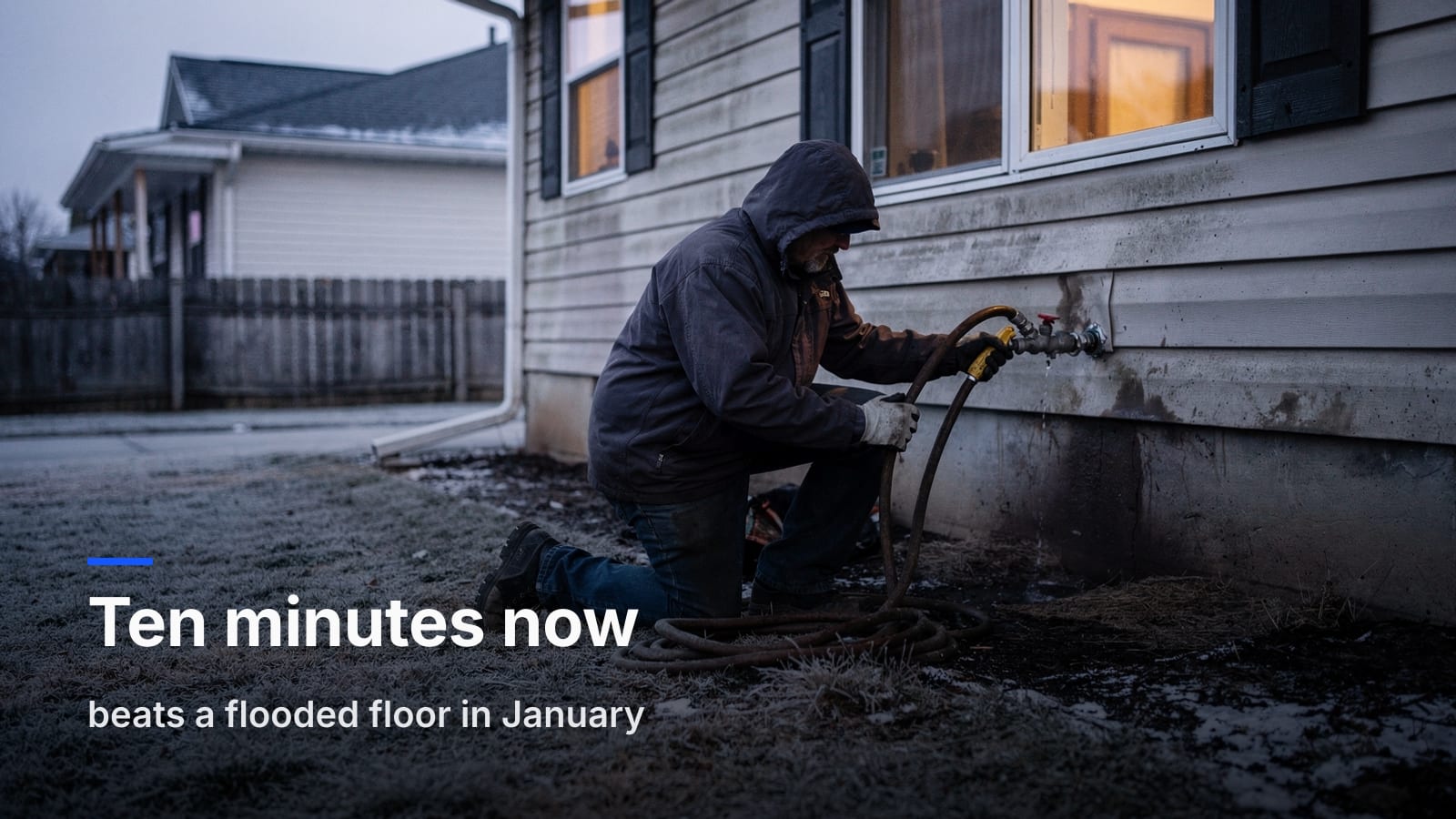
- Disconnect every garden hose. A hose left attached traps water in the spigot and the pipe behind it, and that trapped water has nowhere to expand when it freezes. Do this before the first hard freeze, which in the Boise area usually means getting it done by mid-to-late October.
- Drain and store hoses somewhere above freezing if you plan to reuse them next season.
- Shut off interior valves to exterior spigots if your home has them, and drain the line past the valve. Many Boise homes built in the last few decades have a dedicated shutoff for outdoor faucets; check near where the pipe exits the foundation.
- Install insulated faucet covers on any hose bib without an interior shutoff. These are inexpensive foam or hard-shell covers that slip over the spigot.
- Check irrigation systems. Blow out sprinkler lines and shut off the backflow preventer before the ground freezes. A cracked backflow device is a common and avoidable spring surprise.
- Coil and store garden hoses off the ground so they don't trap moisture against siding or foundation walls over winter.
The indoor checklist
Move inside next, focusing on pipes that run through unheated or marginally heated spaces.
- Locate every exposed pipe run in the crawl space, garage, attic, and basement. Anything running along an exterior wall or through an unconditioned space is a candidate for insulation.
- Wrap pipes with foam sleeves or heat tape. Foam pipe insulation is cheap and slides on in minutes. Heat tape adds active protection for the coldest spots but needs to be rated for the application and plugged into a working outlet.
- Seal air leaks near pipe penetrations: where lines pass through rim joists, foundation walls, or exterior walls. Cold air infiltration is often the real reason a pipe freezes, more than the pipe's location alone.
- Keep crawl space vents and access doors closed once temperatures drop, if your home's crawl space is designed to be sealed in winter. If you're not sure how your crawl space is supposed to be managed seasonally, that's worth confirming before cold weather sets in. For background on how water problems develop in these spaces, see our page on crawl space water removal.
- Open cabinet doors under sinks on exterior walls during extreme cold snaps so warm room air reaches the pipes.
- Let faucets drip on the coldest nights if a pipe is known to be vulnerable. Moving water is harder to freeze than standing water.
- Keep the house heated to at least 55°F, even when you travel. A furnace set too low, or shut off entirely in a vacant house, is one of the most common causes of a widespread freeze.
Water heater and washer hose checks
These two appliances cause a disproportionate share of indoor water damage, and both are easy to inspect.
Water heater:
- Look at the area around the base for rust, mineral staining, or dampness.
- Check the temperature and pressure relief valve for any sign of weeping or corrosion.
- Note the unit's age. Most tank water heaters last 8 to 12 years; older units are more likely to fail without warning.
- Make sure the drain pan (if present) isn't cracked and that its drain line is clear.
A slow water heater leak can go unnoticed for weeks in a utility closet or garage before it saturates flooring or drywall. If you've noticed any of the signs above, our post on water heater leak warning signs walks through what to check next and when to act.
Washing machine hoses:
- Inspect both hot and cold supply hoses for bulges, cracking, or rust at the fittings.
- Replace rubber hoses with braided stainless steel versions, which hold up far better under constant pressure.
- Replace any hose older than about five to seven years regardless of appearance, since rubber degrades from the inside before it shows on the surface.
- Check that the washer isn't pushed so tight against the wall that the hoses are kinked or under strain.
A washer hose failure under full line pressure can release a large volume of water in a short time, often while nobody is home. It's one of the more preventable sources of water damage, and the fix costs far less than a basement full of soaked carpet pad.
Know your main shutoff before you need it
Every homeowner should know where the main water shutoff is and confirm the valve actually turns. In most Treasure Valley homes, the shutoff is either at the water meter near the street or on the interior plumbing line where it enters the house, often in a basement, crawl space access, or utility room. Older gate valves can seize up after years of disuse, so test it now, when there's no water on the floor and no pressure to rush.
If you've never located it, walk the perimeter of your house and trace the line from the meter box inward. Write down the location and tell anyone else living in the house where it is. In an active leak, shutting off the main is the single most effective thing you can do before help arrives. Our post on the first hour after a burst pipe covers exactly what to do in that order.
When prevention isn't enough
Even a well-prepared home can get caught by a hard freeze, a vacation power outage, or a hidden pipe in a poorly insulated space. If you come home to standing water, a damp crawl space, or a water heater that's clearly failed, the priority is getting water out and the space drying fast, since wet building materials start supporting mold growth within 24 to 48 hours. Fast extraction and structural drying reduce how much material ends up affected and how long the cleanup takes.
Costs for this kind of work vary by job, depending on how much water, how long it sat, and what materials got wet. Our water damage cleanup cost guide walks through what typically drives that range. If the water came from a backed-up line, treat it differently and keep people and pets away until it's handled, as described on our sewage backup cleanup page.
A note on electrical and structural hazards
If a frozen or burst pipe has soaked near outlets, a breaker panel, or any wiring, stay out of that area and do not touch switches or appliances in standing water. The same goes for any ceiling that's sagging from trapped water above it or any area where water damage has reached a gas appliance connection. These are situations to call for help with, not troubleshoot yourself.
Questions
Does leaving a faucet dripping really prevent a pipe from freezing?
Yes, for pipes with marginal protection. Moving water loses heat more slowly than standing water, and a small continuous drip relieves pressure buildup if ice does start to form elsewhere in the line. It's not a substitute for insulation, but it helps on the coldest nights.
Can I winterize pipes myself, or do I need a plumber?
Most of the checklist here, disconnecting hoses, adding insulation, checking hoses and the water heater, is doable without a plumber. If you find a valve that won't turn, a water heater showing active leaks, or pipe damage already in progress, that's the point to call in help rather than keep working on it.
Is heat tape safe to leave on all winter?
Heat tape rated for plumbing use is generally safe for continuous seasonal use when installed according to its instructions and plugged into a properly working outlet. Check it periodically for damage, and never use tape rated for roof or gutter de-icing on a water pipe.
What's the difference between a frozen pipe and a burst pipe?
A frozen pipe has ice blocking flow inside it but no visible leak yet. A burst pipe has already cracked or split, usually from the pressure the ice created, and will leak or spray once the blockage thaws or water pressure finds the break.
Should I turn off my water when I leave town in winter?
For an extended absence, shutting off the main and keeping the heat set to at least 55°F is a reasonable combination: it limits how much water a failure can release while keeping pipes warm enough to resist freezing. If a pipe does let go despite your prep, or you're not sure how much damage is hiding behind a wall or under a floor, send us photos or contact us and we'll help you figure out the next step.
Cleanup help in Boise
- Water Heater & Appliance Leak Cleanup in Boise
- Burst Pipe Cleanup in Boise, Idaho
- Crawl Space Water Removal in Boise, Idaho
- Emergency Water Removal in Boise, Idaho
- Fire & Smoke Damage Cleanup in Boise, Idaho
- Flooded Basement Cleanup in Boise, Idaho
- Sewage Backup Cleanup in Boise, Idaho
- Structural Drying After Water Damage in Boise