Christmas Tree, Candle and String Light Fires: Why Even a Small One Leaves Smoke Damage
Short answer
**Is a small fire that was put out still a smoke problem?** Yes — even a fire out in seconds releases soot that films over walls, fabric and electronics, and it leaves an odor that gets worse if ignored. **What starts most holiday fires?** A dry Christmas tree, an open candle flame near fabric or greenery, and old or damaged string lights are the three most common causes. **Should I throw out items that smell like smoke?** Not usually first — many fabrics, soft goods and hard surfaces can be cleaned; cleaning is worth trying before replacing. **When should I call 911 instead of cleaning up myself?** Any time there's an active flame, an electrical smell or sparking, or smoke still coming from inside a wall or ceiling. **Does water from putting out the fire cause damage too?** Yes — extinguisher water or a hose line can soak carpet, subfloor and walls, and it needs to be dried quickly to avoid a second problem.
Water or fire damage right now?
Call any time of day. If you would rather not talk yet, send a few photos and tell us what happened.
Fire, gas smell, or a risk of electric shock: leave the building and call 911 first.
Why holiday decorations catch fire so fast
A live Christmas tree looks festive and feels harmless, but a dry one is one of the fastest-burning things you can have in a living room. Needles lose moisture every day the tree is up, especially in a house with dry winter heat running constantly, which describes most Boise homes from December through February. Once a dry tree ignites, it can go from a small flame to full involvement in well under a minute. That is faster than most people can react.
Candles are the second common cause. An open flame left near a paper decoration, a fabric runner, dried greenery, or wrapping paper needs very little encouragement to jump. A candle burning unattended, knocked over by a pet, or placed too close to curtains is a routine cause of small house fires every winter.
String lights cause fires in a quieter way. Lights that have been stored in a damp garage or attic box for a year can have cracked insulation, frayed wire, or a loose bulb socket. Plugged into an old extension cord and left running overnight or while no one is home, a short can smolder inside a wall outlet, behind a curtain, or inside a tangle of cords under the tree skirt before anyone notices.
Basic habits that prevent most of these fires
- Keep a live tree watered daily, and get rid of it once needles are dry and fall off with a light touch.
- Keep candles at least a foot from anything that can burn, and never leave one burning in an empty room.
- Check string lights each year for cracked cords, bare wire, or a melted plug before you use them again.
- Don't daisy-chain multiple extension cords or overload one outlet with several light strings.
- Turn off tree lights and blow out candles before bed or before leaving the house.
What's actually left after a small fire is out
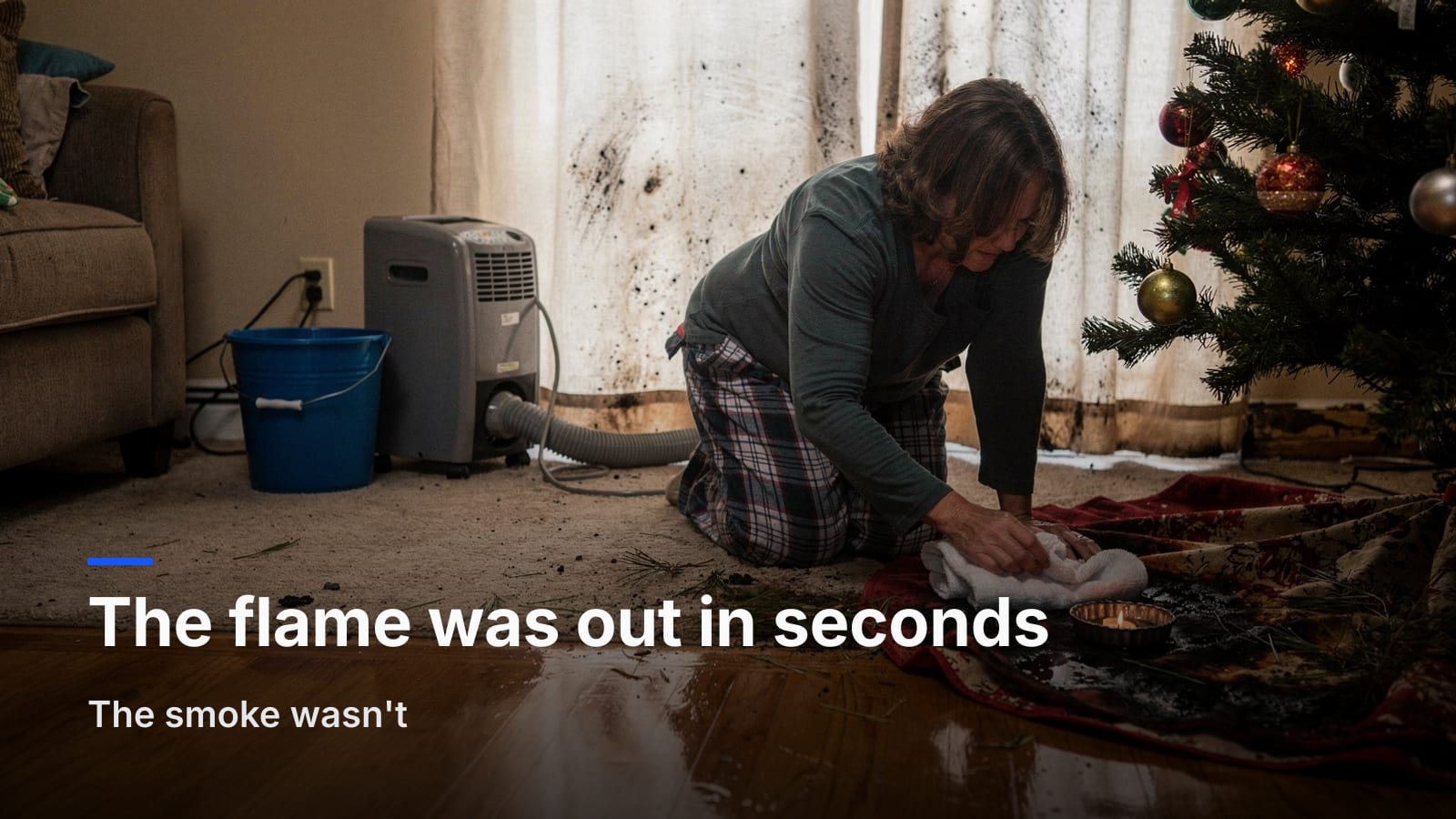
People assume that if the flame didn't spread and nothing structural burned, there's nothing left to deal with. That's rarely true. A few minutes of open flame, even confined to a tree, a candle dish, or a tangle of cords, produces smoke and soot that spreads well beyond where the fire itself touched.
Soot film. Smoke particles are fine and sticky. They settle on walls, ceilings, window glass, picture frames and electronics in the room, and often drift into adjoining rooms through open doorways and HVAC returns. The film can look like a light gray haze, or it may barely be visible until you wipe a white cloth across a shelf.
Odor in fabric and soft goods. Smoke odor works its way into couch cushions, curtains, carpet, clothing in nearby closets, and even paper in drawers. The odor doesn't come out with a quick wipe-down or an air freshener — it's embedded in the fibers and needs real cleaning.
Water from putting the fire out. A fire extinguisher, a pot of water, or a garden hose used to knock down the flame leaves standing water and soaked material behind. Carpet, padding, and subfloor near the fire can hold that moisture for days if it isn't dried properly, which sets up conditions for mold on top of the smoke problem. Fast drying is one of the best ways to head that off. If you want more detail on why drying speed matters after any kind of water event, our post on what to do in the first hour after a burst pipe covers the same urgency, just from a plumbing angle.
When to call 911 instead of handling it yourself
Some situations are not a cleanup job, they're an emergency. Call 911 and stay out of the house if:
- There's any active flame or visible fire, even small.
- You smell something electrical burning, or hear sparking or popping from an outlet or cord.
- Smoke is coming from inside a wall, ceiling, or behind a cabinet, which means the fire may still be smoldering where you can't see it.
- The fire touched a gas appliance, gas line, or anything near the furnace or water heater.
Once the fire department has confirmed the home is safe to re-enter, that's the point where cleanup starts.
What cleanup actually covers
After a small fire is out and the home is safe, the work is about removing smoke residue and moisture before they settle in permanently, not about repairing anything that burned.
That typically means:
- Cleaning soot film from walls, ceilings, trim, and hard surfaces.
- Cleaning and deodorizing fabric, carpet, and contents affected by smoke odor.
- Extracting any water left from extinguishing the fire and drying the affected area with air movers and dehumidifiers.
- Running odor control equipment to pull smoke smell out of the air and materials, not just mask it.
If the fire also damaged framing, drywall, flooring or other building materials, that repair work is handled separately from the cleanup side. For the drying and smoke part specifically, our fire and smoke cleanup page walks through what that process looks like in more detail, and the structural drying page covers how we handle lingering moisture from the extinguishing water.
Homeowners insurance in Idaho generally covers sudden fire damage, including the smoke and water cleanup that follows it, but coverage details and deductibles vary by policy. If you're not sure where to start with a claim, the steps in filing a water damage claim in Idaho apply closely to fire-related water damage too, since the claim process is similar.
A word on doing it yourself
A very light soot film on a hard, washable surface, caught quickly, can sometimes be wiped down with care. But soot smears easily if you use the wrong cloth or cleaner, turning a light gray haze into a dark streak that's harder to remove. Fabric, upholstery, and anything with any odor at all is worth getting a second opinion on before you spend hours scrubbing something that needs a different approach. If you're not sure whether what you're looking at is manageable or not, you can send photos through our photo help page and get a read on it before deciding.
Questions
Is a small fire that was put out still a smoke problem?
Yes. The size of the flame doesn't determine how far the smoke traveled. A fire out in under a minute can still leave soot on surfaces throughout the room and odor embedded in fabric, carpet, and nearby closets. The visible damage from the flame itself is often the smallest part of the problem.
How do I get a smoke smell out of my belongings?
Washable fabrics usually need a proper wash cycle, sometimes more than once, rather than just an air freshener or fabric spray, which only masks the smell temporarily. Upholstery, carpet, and non-washable items generally need professional odor treatment that pulls the smoke out of the material instead of covering it up. Items left untreated for days tend to hold the odor more stubbornly, so don't wait to deal with it.
Can I just air out the house instead of cleaning it?
Opening windows helps clear smoke smell from the air, but it does nothing for soot sitting on surfaces or odor trapped in fabric and porous materials. Airing out the house is a reasonable first step, not a substitute for cleaning.
Will my homeowners insurance cover a small fire like this?
Most homeowners policies in Idaho cover sudden, accidental fire damage including the related smoke and water cleanup, but deductibles and specific coverage terms vary by policy. Check with your insurer or read through does homeowners insurance cover water damage in Idaho for a sense of how these claims typically work.
Does a small fire mean I need to worry about mold too?
If water was used to put the fire out and the area wasn't dried quickly, yes, mold becomes a real risk within a couple of days. Fast, thorough drying of carpet, padding, and any soaked materials is the main way to prevent that from starting. If you've had a small fire from a tree, a candle, or a light string and you're not sure what the smoke and water left behind, call us or send photos through our photo help page and we'll tell you what we're seeing.
Cleanup help in Boise
- Water Heater & Appliance Leak Cleanup in Boise
- Burst Pipe Cleanup in Boise, Idaho
- Crawl Space Water Removal in Boise, Idaho
- Emergency Water Removal in Boise, Idaho
- Fire & Smoke Damage Cleanup in Boise, Idaho
- Flooded Basement Cleanup in Boise, Idaho
- Sewage Backup Cleanup in Boise, Idaho
- Structural Drying After Water Damage in Boise